Ever felt that sudden, cold shift in the room when someone enters? In practice, that subtle change in tone, the way a conversation dies, or the way a door seems to close before it's even been touched? It’s a feeling most of us recognize, even if we don't always have the right word for it in the moment.
Counterintuitive, but true.
Most people confuse a few different terms here. But they aren't the same thing. Plus, they use "bias," "prejudice," and "discrimination" interchangeably. One is a thought, one is a feeling, and one is an action.
When we talk about discrimination, we're talking about the actual behavior. On top of that, it's the point where a thought becomes a deed. And that's where the real damage happens.
What Is Discrimination
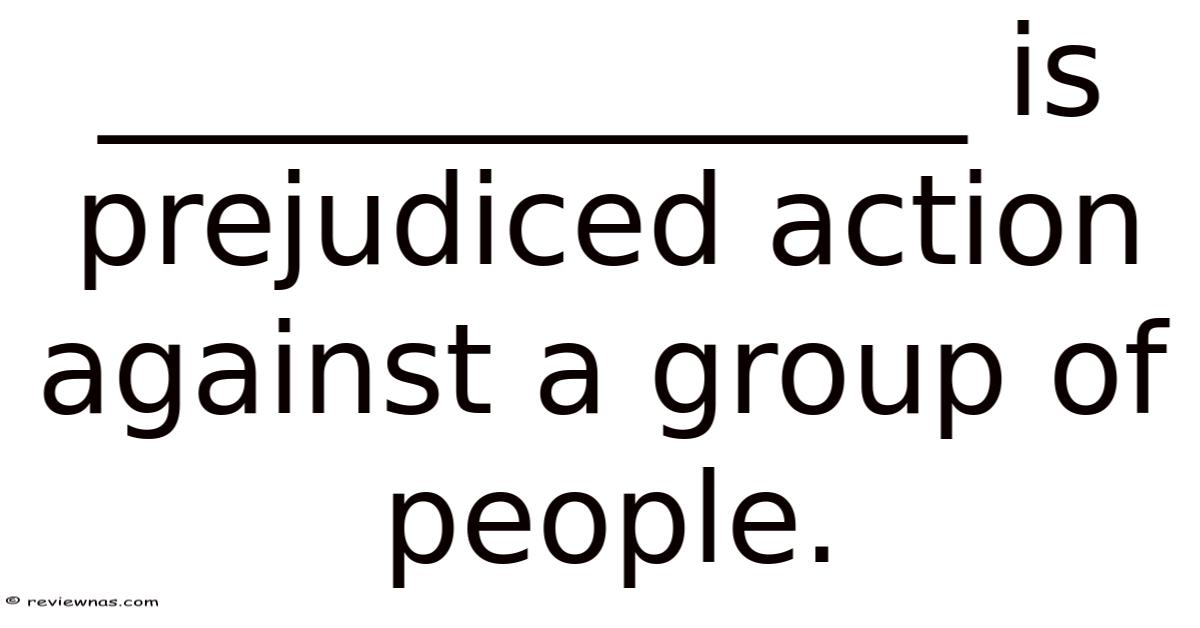
Look, the simplest way to put this is that discrimination is prejudiced action against a group of people. It's not just "having a bias"—it's acting on that bias to treat someone differently, usually worse, based on who they are or what group they belong to.
It’s the bridge between a private thought and a public act. Consider this: see the difference? If I refuse to hire someone because they belong to that group, that's discrimination. If I think a certain group of people is lazy, that's a prejudice. One is an internal flaw; the other is a systemic or individual attack Easy to understand, harder to ignore..
The Difference Between Bias and Action
We all have biases. In practice, it's how the human brain works—we categorize things to make sense of a chaotic world. The problem starts when those categories become stereotypes, and those stereotypes become the basis for how we treat people But it adds up..
Bias is the seed. Discrimination is the tree that grows from it. When someone is denied a loan, passed over for a promotion, or harassed on the street because of their race, gender, religion, or sexual orientation, they aren't fighting a "bias." They're fighting a concrete action that has real-world consequences But it adds up..
Direct vs. Indirect Discrimination
There's a version of this that's loud and obvious. It's the "you can't come in here" or the "we don't hire people like you.Practically speaking, that's direct discrimination. " It's blatant, it's ugly, and it's relatively easy to identify Simple, but easy to overlook..
But then there's indirect discrimination. Which means this is the sneakiest part. Take this: if a company requires a specific type of degree that is historically inaccessible to certain demographics, they might not be trying to exclude people. But the result is the same. This happens when a rule or a policy seems neutral on the surface, but in practice, it unfairly disadvantages a specific group. The outcome is discriminatory, even if the intent wasn't explicitly malicious No workaround needed..
Some disagree here. Fair enough.
Why It Matters / Why People Care
Why does this matter? Because discrimination isn't just "mean." It's a mechanism of exclusion that creates a permanent underclass. When you deny a group of people access to housing, healthcare, or employment, you aren't just hurting their feelings. You're limiting their life expectancy, their wealth, and their children's future.
When discrimination becomes systemic, it stops being about one "bad apple" and starts being about a broken machine. That's why if the machine is designed to favor one group over another, the people inside the machine might not even realize they're participating in it. They just think, "This is how things have always been Which is the point..
Here's the thing—when we ignore this, we lose out on talent, perspective, and innovation. A society that discriminates is a society that is operating at half-capacity. It's inefficient, it's unstable, and it creates a cycle of resentment that eventually boils over.
How It Works (and How It Manifests)
To actually solve the problem, you have to understand how it operates. Discrimination doesn't always look like a shouting match. More often, it looks like a series of small, quiet exclusions.
In the Workplace
The professional world is where we see this most clearly. " That phrase is a massive red flag. It often starts with "cultural fit.When a manager says, "They're great on paper, but I'm not sure if they're a cultural fit," what they often mean is, "This person doesn't look, talk, or act like the people I'm already comfortable with Most people skip this — try not to. Still holds up..
This leads to the "glass ceiling." It's that invisible barrier that prevents certain groups from rising to the top, regardless of their merit. You'll see people from marginalized groups doing the heavy lifting in entry-level roles, but the C-suite remains a monolith. That's not a lack of talent; it's the result of discriminatory promotion patterns Worth keeping that in mind..
In Housing and Finance
At its core, where the stakes get incredibly high. Think about redlining—the historical practice of denying mortgages to people in specific neighborhoods based on race. Even though those laws changed, the economic ripple effects are still here.
When a landlord tells a potential tenant that an apartment is "just rented" the moment they hear an accent or see a name on an application, that's discrimination. When a bank charges higher interest rates to a specific demographic, that's discrimination. These actions prevent people from building generational wealth, which keeps the cycle of inequality spinning Less friction, more output..
In Healthcare and Law Enforcement
At its core, perhaps the most dangerous manifestation. Why? Consider this: because of unconscious prejudices about pain tolerance. Think about it: in healthcare, studies have shown that patients of color often receive less pain medication than white patients for the same injuries. That's a prejudiced action that can literally be a matter of life or death Most people skip this — try not to. Worth knowing..
In the legal system, it shows up in sentencing disparities. Consider this: two people commit the same crime, but one gets probation while the other gets five years in prison. When the deciding factor is the defendant's race or socioeconomic status, the law is no longer blind—it's discriminatory Surprisingly effective..
Worth pausing on this one And that's really what it comes down to..
Common Mistakes / What Most People Get Wrong
Honestly, this is the part most guides get wrong. People try to "solve" discrimination by telling everyone to "just be nice."
Look, being nice is great. But you can be the nicest person in the world and still participate in discriminatory systems. But "niceness" doesn't fix a systemic problem. If you're "nice" to your coworkers but still only mentor people who look like you, you are contributing to the exclusion of others Less friction, more output..
Another common mistake is the idea that discrimination is only "intentional." People say, "I didn't mean to be biased, so it's not discrimination."
Here's the real talk: the impact matters more than the intent. If you step on someone's foot, it doesn't matter if you didn't mean to do it—their foot still hurts. In the same way, discriminatory outcomes are still discriminatory, regardless of whether the person doing it had "good intentions Took long enough..
Practical Tips / What Actually Works
If you want to actually move the needle, you have to move past the surface level. You can't just put a diversity statement on a website and call it a day Less friction, more output..
Audit Your Defaults
Start by looking at your "defaults.Who do you trust for a high-stakes project? Also, " Who do you go to when you need a recommendation? If everyone in your inner circle looks and thinks exactly like you, that's a sign that your biases are driving your actions.
The fix isn't to feel guilty. The fix is to deliberately expand your circle. Which means if you find yourself thinking, "I don't think this person is a good fit," ask yourself why. Consider this: guilt is useless. Practically speaking, seek out perspectives that make you uncomfortable. Is it a lack of skill, or is it just a lack of familiarity?
Implement Objective Standards
The best way to kill discrimination in a professional setting is to remove the "gut feeling." Gut feelings are just biases in a fancy suit.
Instead, use blind recruitment. Practically speaking, remove names and photos from resumes. Use a standardized set of questions for every single candidate. When you move from "I like this person" to "This person meets these five specific criteria," you strip away a huge portion of the prejudice.
Speak Up in the "Quiet" Moments
Most discrimination doesn't happen in a public forum. It happens in the side-bar conversations. It's the joke told in the breakroom or the dismissive comment made during a meeting Worth knowing..
The most effective way to stop this is to call it out in real-time, but do it thoughtfully. Instead of attacking the person, ask a question. "What do you mean by that?Also, " or "Why do you think that's the case? " This forces the person to examine their own logic and often makes them realize how their comment sounded Most people skip this — try not to..
FAQ
Is prejudice the same as discrimination? No. Prejudice is the internal feeling or opinion. Discrimination is the external action. Prejudice is the thought; discrimination is the act.
Can you be discriminatory without realizing it? Absolutely. This is called implicit bias. You might believe you are egalitarian, but your subconscious patterns can still lead you to treat people differently. That's why objective systems are more reliable than "good intentions."
What is the difference between equality and equity? Equality is giving everyone the same thing. Equity is giving everyone what they need to reach the same outcome. If one person is standing on a box and another isn't, giving them both another box doesn't solve the problem. Equity is giving the box to the person who actually needs it to see over the fence.
How do I handle it if I realize I've been discriminatory? Own it. Apologize without making it about your own feelings. Don't say, "I'm so sorry, I feel terrible that I did that." Instead, say, "I realize my action was unfair, and I'm sorry for the impact it had." Then, change the behavior Which is the point..
At the end of the day, fighting discrimination isn't about achieving a perfect world where no one ever has a biased thought. That's impossible. It's about building systems and habits that ensure those thoughts don't turn into actions. It's about making sure that a person's potential isn't capped by someone else's narrow view of the world. It takes work, and it's often uncomfortable, but it's the only way to actually move forward Less friction, more output..
