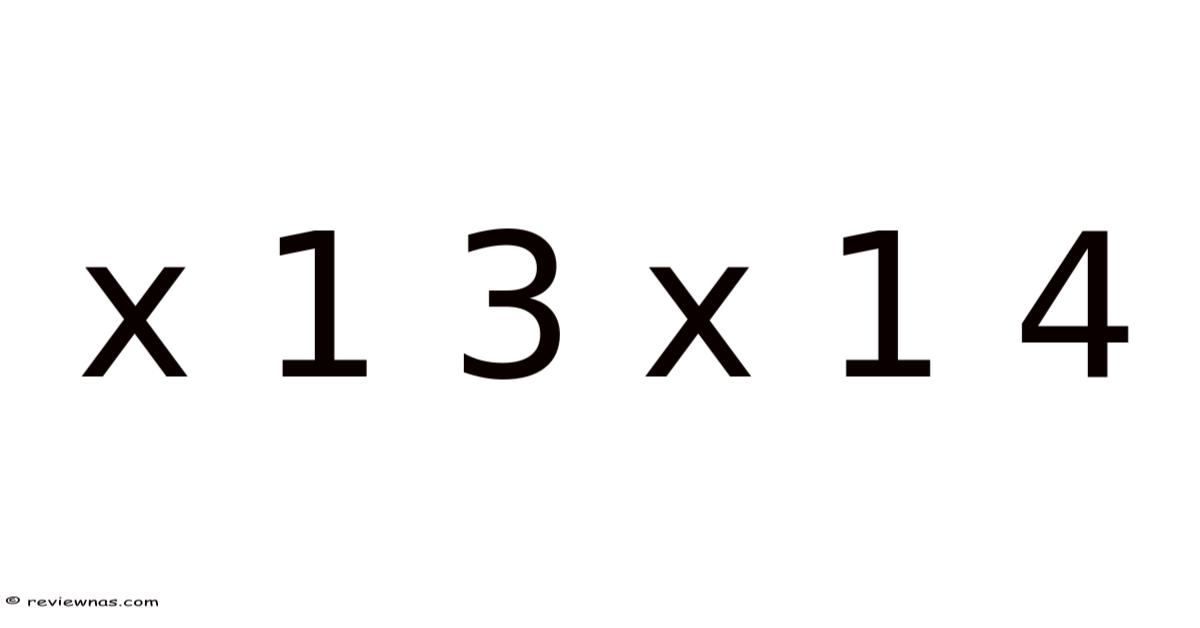
## What Is 1 3 x 1 4?
Let’s start with a question: Have you ever looked at a math problem and thought, “Why does this even matter?” You’re not alone. Which means fractions like 1 3 x 1 4 might seem like abstract nonsense, but they’re actually everywhere—whether you’re baking a cake, measuring a room, or splitting a bill. This isn’t just about numbers on a page; it’s about understanding how parts make up a whole.
Think of 1 3 x 1 4 as a puzzle. At first glance, it’s two fractions multiplied together. But when you break it down, it’s a snapshot of how math simplifies complex ideas. Even so, fractions are the language of division, and multiplying them is like asking, “What happens when you divide something into parts and then divide those parts again? ” Sounds confusing? It shouldn’t be. Let’s unpack this.
## Why It Matters / Why People Care
Here’s the thing: 1 3 x 1 4 isn’t just a math exercise. It’s a gateway to understanding ratios, proportions, and real-world applications. Imagine you’re a chef adjusting a recipe. If the original recipe calls for 1 3 cups of sugar and you need to cut it in half, you’re essentially solving 1 3 x 1 2. The same logic applies here—except now you’re working with 1 4 instead of 1 2 Worth knowing..
Or picture this: You’re building a model and need to scale down a design by 1 4. If the original blueprint uses 1 3-inch measurements, multiplying them gives you the exact size you need. Math isn’t just for textbooks—it’s the tool that makes practical problems solvable.
## How It Works (or How to Do It)
Alright, let’s get into the nitty-gritty. Multiplying fractions sounds intimidating, but it’s simpler than you think. Here’s the short version:
- Multiply the numerators: Take the top numbers of both fractions. For 1 3 x 1 4, that’s 1 x 1 = 1.
- Multiply the denominators: Now the bottom numbers: 3 x 4 = 12.
- Simplify the result: Combine them into 1/12.
That’s it. Now, no need for common denominators or cross-multiplying. Fractions play nice when multiplied straight across.
But wait—what if the result isn’t already in its simplest form? Simplify 6/12 to 1/2. See? Multiply numerators: 2 x 3 = 6. Denominators: 3 x 4 = 12. In real terms, let’s say you’re dealing with 2/3 x 3/4. It’s all about reducing fractions to their lowest terms Nothing fancy..
Counterintuitive, but true It's one of those things that adds up..
## Common Mistakes / What Most People Get Wrong
Here’s where things get messy. Most people stumble on two fronts:
- Forgetting to simplify: Leaving the answer as 1/12 is correct, but some panic and overcomplicate it. Trust the process.
- Mixing up steps: Trying to add denominators instead of multiplying them. That’s a rookie error.
Another trap? 25**, but multiplying decimals introduces rounding errors. 333…** and **1 4 = 0.Converting fractions to decimals prematurely. Consider this: sure, **1 3 = 0. Stick to fractions until the final step.
## Practical Tips / What Actually Works
Want to master this? Here’s what actually works:
- Visualize it: Draw a rectangle divided into thirds and fourths. Shade 1 3 of it, then 1 4 of that shaded area. The overlapping section? That’s 1 12.
- Use real-life examples: Baking, construction, or even shopping discounts (e.g., “Take 1 4 off a 1 3 sale price”) make the concept stick.
- Practice with patterns: Try 1 2 x 1 3 = 1 6, 1 3 x 1 4 = 1 12, 1 4 x 1 5 = 1 20. Notice the pattern? The denominator increases by 3 each time.
## FAQ
Q: Why do we multiply straight across instead of finding a common denominator?
A: Common denominators are for addition/subtraction. Multiplication is simpler—just top times top, bottom times bottom.
Q: Can I cancel numbers before multiplying?
A: Absolutely! If you see 2/3 x 3/4, cancel the 3s first. That leaves 2/1 x 1/4 = 2/4 = 1/2. Pro tip: Always look for common factors Not complicated — just consistent..
Real‑World Applications
Multiplying fractions isn’t just a classroom exercise—it’s a hidden workhorse in many everyday tasks Simple, but easy to overlook..
-
Cooking & Baking – Adjusting recipes is a classic case. If a cookie sheet calls for 2/3 of a cup of sugar but you’re making only 3/5 of the batch, you multiply 2/3 × 3/5 = 6/15 = 2/5 cups Worth knowing..
-
Construction & DIY – Cutting lumber or tiling a floor often involves fractional measurements. A carpenter who needs 3/8 of a board for one shelf and wants 5/6 of that for a second shelf will calculate 3/8 × 5/6 = 15/48 = 5/16 of the original board.
-
Finance & Discounts – When a store offers “½ off” and you have a coupon for “⅓ off the sale price,” the effective discount is ½ × ⅓ = 1/6 of the original price.
-
Science & Engineering – In physics, probability often involves multiplying fractions (e.g., the chance of two independent events both occurring) Small thing, real impact..
These scenarios illustrate why a solid grasp of fraction multiplication can save time, reduce waste, and sharpen decision‑making.
Advanced Techniques
Once the basics are mastered, a few shortcuts can make fraction work faster and more intuitive.
Cross‑Cancellation Before Multiplying
Instead of multiplying then simplifying, look for common factors between any numerator and any denominator before you start It's one of those things that adds up..
Example: 14/15 × 9/28
- Spot that 14 and 28 share a factor of 7 → 14 ÷ 7 = 2, 28 ÷ 7 = 4.
- Spot that 9 and 15 share a factor of 3 → 9 ÷ 3 = 3, 15 ÷ 3 = 5.
Now the problem is 2/5 × 3/4 = 6/20 = 3/10 That's the part that actually makes a difference. That alone is useful..
Using Prime Factorization for Complex Problems
When denominators are large, break each number into its prime factors, cancel matching primes, then multiply the remaining factors. This method reduces the chance of arithmetic errors and is especially handy for mental math.
Converting to Mixed Numbers When Needed
If the final product is an improper fraction (numerator larger than denominator), you may want to express it as a mixed number for readability.
Example: 7/4 × 5/3 = 35/12 = 2 11/12.
Handling Negative Fractions
The sign rules stay the same as with integers: an odd number of negative signs yields a negative result; an even number yields a positive result.
Example: ‑2/5 × 3/7 = ‑6/35 Simple as that..
These advanced tricks become second nature with practice and can turn a tedious calculation into a quick mental snapshot.
Quick Reference Cheat Sheet
| Situation | Strategy |
|---|---|
| Straight multiplication | Multiply numerators, multiply denominators, simplify. |
| Large denominators | Use prime factorization to cancel. |
| Negative signs | Apply integer sign rules. In practice, |
| Result > 1 | Convert to mixed number. |
| Common factor exists | Cross‑cancel before multiplying. |
| Real‑world scaling | Visualize with area models or physical objects. |
Most guides skip this. Don't Easy to understand, harder to ignore..
Conclusion
Multiplying fractions may initially appear intimidating, but by breaking the process into clear, repeatable steps—multiply top by top, bottom by bottom, then simplify—you gain a powerful tool for solving everyday problems. Avoiding common pitfalls like premature decimal conversion and forgetting to simplify keeps calculations accurate and efficient.
By incorporating visual aids, real‑world examples, and advanced techniques such as cross‑cancellation, you can move from the basics to fluent, confident fraction multiplication. Whether you’re tweaking a recipe, measuring materials, or analyzing probabilities, mastering this fundamental skill empowers you to tackle a wide array of practical challenges with precision and ease.
